The cost and amount of procedures for organic certification can be beyond the means of a single small farmer. This is a big problem in Vietnam, where most of the agricultural area is located in small-scale households. Group certification was born to solve: many producers stand together in one certification, with a common management system to monitor compliance.
What is an internal control system (ICS).
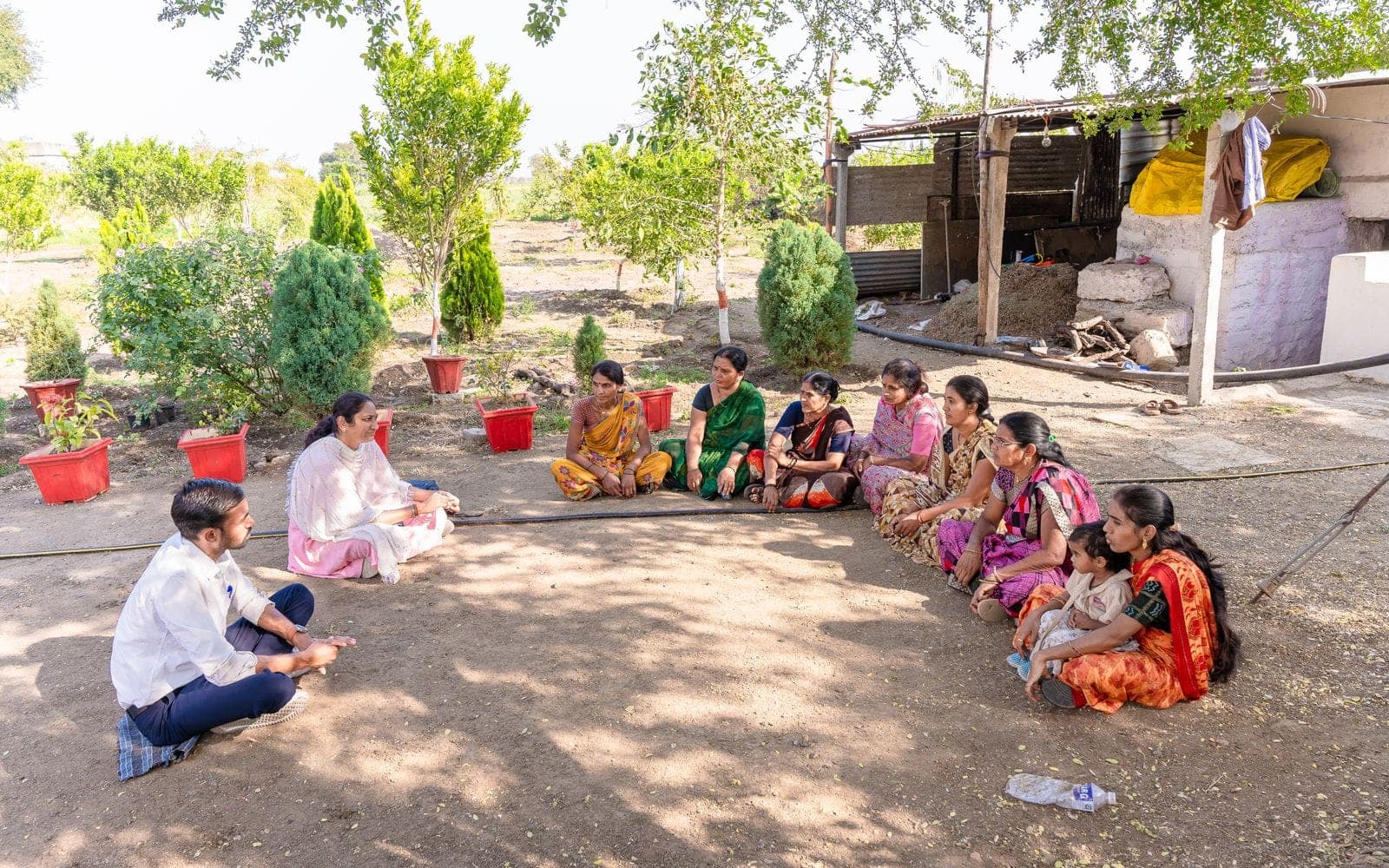
The Internal Control System (ICS) is an apparatus operated by the group's own organization - cooperatives, cooperative groups, focal enterprises - to ensure each member complies with organic standards. It includes membership regulations and sanctions, training materials, updated farmer lists and land plot maps, each household's commitment contract, and most importantly, a team of internal auditors who visit each household at least once a year.
Two-layer evaluation
- Inner layer:Internal inspectors visit 100% of member farms, make records of each household, detect and propose handling violations. Inspectors must be trained and should not evaluate on their own or a relative's behalf.
- Outer layer:The independent certification organization evaluates the ICS system itself (records, inspector capacity, consistency of records) and visits a sample of farmers — usually according to the square root formula of the number of households — to verify whether the ICS actually works or exists only on paper.
If the certification body concludes that the ICS is reliable enough, the entire group is certified. If ICS is lax — internal inspection records are sketchy, violations are detected without action, the list of households does not match reality — the entire group can be suspended, even those who do the right thing.
Group certification compared to PGS
| Group certification (third party + ICS) | PGS — Participation Guaranteed System | |
|---|---|---|
| Who reviews? | Independent, designated/accredited certification body | It is the parties in the system: farmers, sellers, consumers, experts |
| Legal value | Accredited for domestic and export trade (depending on standards) | Mainly serving the domestic market, direct selling, community trust |
| Expense | Higher, but divided among the whole group | Low, based on volunteer effort |
| Position in Vietnam policy | Required for "organic" labeling according to Decree 109/2018/ND-CP | Encouraged to participate by Decree 109/2018/ND-CP |
Decree 109/2018/ND-CP clearly states that farmers, organizations and individuals are encouraged to participate in the Participatory Guarantee System (PGS) — a system based on the participation of farmers, sellers, consumers and relevant parties. PGS is suitable for direct sales chains and builds on-site trust; For export or entering large supermarkets, in most cases, group third-party certification is still needed.
Conditions for the group model to work
Group certification is suitable for households of similar small scale, cultivating similar crops, in close proximity to each other. The key to success is the governance capacity of the focal organization: records are complete and up-to-date, internal auditors are trained and independent, and sanctions against violators are strictly enforced — including removal from the group when necessary, to protect the overall certification.
Benefits beyond certification
A well-organized group also brings other advantages: joint purchasing of inputs at better prices, joint negotiations with buyers, sharing techniques, pooling output to enough scale for large orders, and reducing output risks. For many production areas, ICS becomes the organizational infrastructure for the entire value chain, not just an assessment tool.
How are certification costs shared?
Suppose a cooperative has 40 households, total area of 30 hectares. The cost of group certification per year - including ICS system assessment fee, sample visit fee for a number of households, license issuance and monitoring fee - if a fixed amount, is divided among 40 households or by area, each household only bears a small portion compared to making its own certification. In return, the group must pay for the ICS apparatus itself: internal auditors' salaries, printing of forms, and training. Many places use support resources under Decree 109/2018/ND-CP and local agricultural extension budgets to offset certification costs in the first few years.
Why do some groups disband?
- The ICS apparatus only exists on paper for evaluation, without actually inspecting each household.
- There are no sanctions, or if they exist but are not applied, causing households to lose motivation to do the right thing.
- Unstable output: certified but unable to sell at a better price, households give up.
- Complete dependence on a project officer; When the project ends, ICS stops working.
The common element of sustainability groups is that ICS is run as a regular function of the cooperative, with its own budget and clear responsibilities, not as a donor-dependent activity.
Reference
- Decree 109/2018/ND-CP on Organic Agriculture— PGS regulations and support policies.
- Decision 885/QD-TTg dated June 23, 2020 — Organic agriculture development project for the period 2020–2030.
- TCVN 12134:2017 — Requirements for certification organizations(including group assessment).