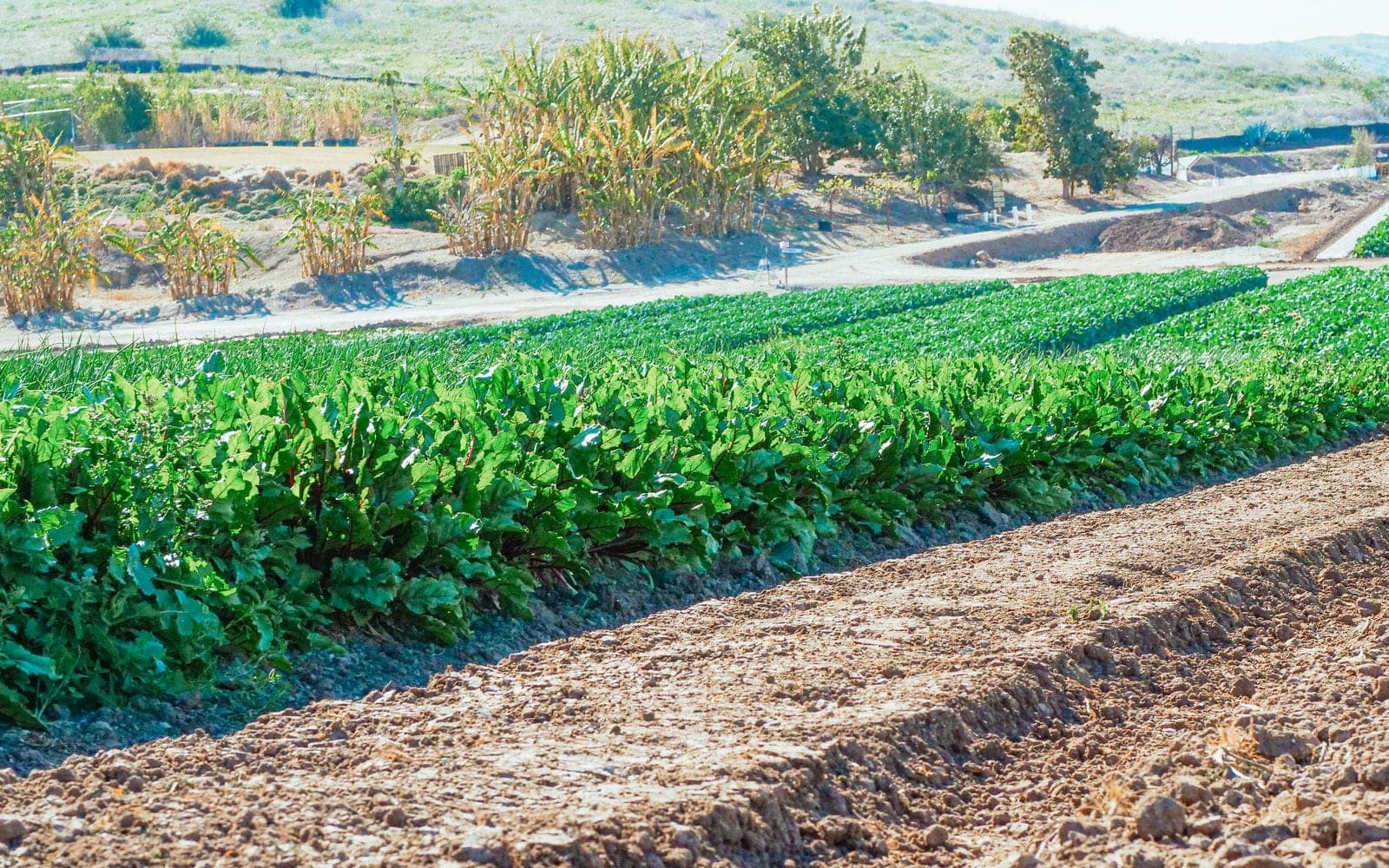
The term "regenerative agriculture" appears increasingly in the commitments of food corporations and in climate communication. For organic producers, understanding this concept helps position products and engage in conversations with buyers proactively, rather than passively when asked.
What is regenerative agriculture?
Regenerative agriculture is an approach that focuses on improving soil health, increasing organic matter content (and thereby the amount of carbon stored in the soil), increasing biodiversity and improving the water cycle over time. It is often described in terms of desired outcomes rather than in terms of a fixed list of rules, and focuses on a set of practices: reduced or eliminated tillage, keeping soil with living mulch or residue, crop diversity and rotation, livestock integration, and minimizing aggregate inputs.
Intersection with organic farming
Many of the core practices overlap: building organic matter, diverse crop rotations, cover crops, limiting soil disturbance, nurturing soil microflora, and keeping hedgerows and flower strips for natural enemies. A well-managed organic farm has typically done much of what is called "regenerative" — just not called it that.
Differences
| Organic farming (certified) | Regenerative agriculture | |
|---|---|---|
| Facility | Specific set of standards (TCVN 11041, EU, USDA, JAS) and third-party assessment | There is no globally unified certification framework; Several private programs are taking shape |
| Focus | "Grow with what" — tight control of inputs | "How soils and ecosystems change" — measuring results |
| Aggregate input | Ban almost all synthetic chemicals | Some interpretations focus on soil outcomes, without absolutely prohibiting all inputs |
| Measurement | Comply with procedures and records | Soil index: organic matter, carbon, biodiversity, water infiltration |
Because "regenerative" does not yet have a legal definition, a "regenerative product" claim on a label does not currently carry the same legal weight as an "organic" label. Professional buyers often request accompanying measurement data.
Responding to buyers when asked about "regeneration"
More and more buyers are including "renewable" in their supplier evaluation questionnaires. How to respond proactively: mention existing organic certification as a proven basis; List current soil improvement practices (mulching, crop rotation, reduced tillage, compost); and present soil health monitoring data over several years if available. Avoid over-promising data — if you haven't measured soil carbon yet, say clearly that you haven't, with a plan to get started. Professional buyers appreciate honesty and a verifiable roadmap for improvement more than a grandiose claim without numbers.
Risks of "greenwashing" and how to prevent it
In some markets, regulators and consumer protection organizations have cracked down on vague or unsubstantiated environmental claims. For exporters, a "renewable" or "carbon neutral" claim without clear methodology and data is a legal and reputational risk. Rule of thumb: say only what is measured, clearly state the scope and assumptions, and be prepared to provide records when asked.
Contact Vietnam policy
Vietnam does not have its own regulations on "regenerative agriculture", but the policy orientation is in the same direction. Decision 885/QD-TTg associates the development of organic agriculture with "circular agricultural economy" and is environmentally friendly. Vietnam's sustainable agriculture and rural development strategy and its commitments to reduce emissions (including a net zero emissions target by 2050) both create a favorable context for land reclamation and soil carbon capture practices.
Pragmatic approach
These two frameworks are not mutually exclusive. Many producers see organic certification as a verifiable foundation, and the regenerative story as a way to communicate the long-term soil and ecosystem improvements they are making. It is a prerequisite that every claim must be accompanied by data and records: periodic soil organic matter measurements, practice records, and seasonal status photographs. Without data, "renewable" is just a marketing word that's open to question.
Measuring soil health: practical indicators
If you want to tell an evidence-based reproduction story, it makes sense to track a number of metrics over time across the same fixed sampling points:
- Organic matter (or organic carbon) content in soil:central index, measured every 1–2 years.
- pH and cation exchange capacity:reflects the ability to retain and provide nutrients.
- Texture and compression:Observe the soil profile and water infiltration rate.
- Biological activity:Earthworm density, residue decomposition rate.
- Ground coverSeasonal: proportion of time the land is covered by trees or residue.
There is no need for a complicated laboratory for everything: some indicators can be observed right in the field, as long as it is done consistently and recorded.
Renewable certification programs are emerging
On the international market, several private labels for regenerative agriculture have emerged, developed by NGOs or business coalitions. They do not yet have a state legal framework behind them like organic labels, criteria and levels of stringency vary, and some only apply within the supply chain of a specific corporation. Producers asked to participate in such a program should ask clearly: who verifies, what the cost is, whether the label will help sell at a better price or open more customers, and whether it overlaps or complements existing organic certification.
Reference
- Decision 885/QD-TTg — Organic agriculture development project for the period 2020–2030(associated with circular agriculture).
- FiBL — comparative study of organic and improved soil farming systems.
- Ministry of Agriculture and Environment— sustainable agricultural policy, reducing emissions.