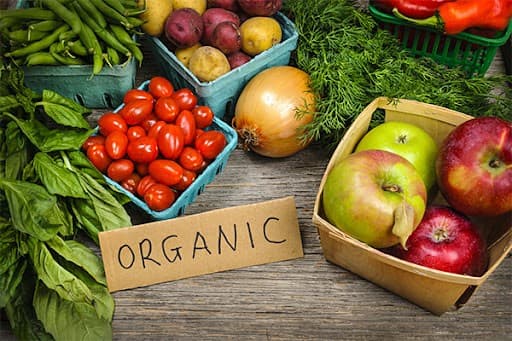
The global organic food market is expected to grow strongly, reaching 568.82 billion USD by 2029 thanks to health-oriented consumer demand. However, the challenge of short shelf life and high costs still puts a lot of pressure on the industry.
The global organic food market has recorded rapid growth in recent years. The market size is expected to increase from 279.19 billion USD in 2024 to 318.37 billion USD in 2025, with a compound annual growth rate (CAGR) of 14%. Growth during this period mainly comes from increasing awareness of the benefits of organic food, increased cases of food poisoning, strong economic growth in emerging markets, influence from digital media and social networks, along with the impact of the Covid-19 pandemic.
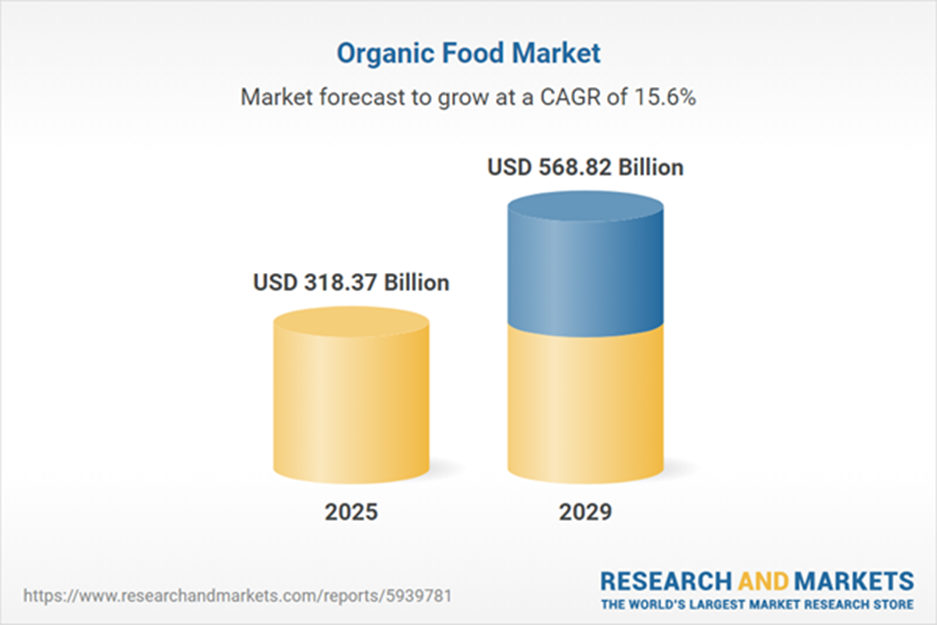
It is forecasted that in the coming years, the organic food market will continue to grow rapidly, reaching 568.82 billion USD by 2029, equivalent to a CAGR of 15.6%. Key drivers during this period include the growing number of health-conscious consumers, changing demographics in emerging markets, the rise of modern retail and the rise of retailers specializing in organic foods in developed economies. Prominent trends are forecast to include improved packaging and labeling, investment in new products, application of artificial intelligence in organic farming, development of zero-calorie beverages, expansion of product portfolio and focus on recycled foods.
Growing health concerns, especially cases of chemical poisoning in food, are driving the market. Consumers are increasingly cautious about the harmful effects of chemical pesticides in food - substances that can cause cancer, endocrine disorders and birth defects. A report by health insurance company Bupa Group (UK) in January 2023 showed that more than 78% of adults in the UK are concerned about their health when entering the new year, especially about weight and mental health - contributing to the trend of switching to organic food.
However, the organic food market also faces a big challenge when the shelf life is shorter than conventional food. According to MSNBC, many organic food products are more perishable due to the lack of preservatives, with spoilage rates up to 50% for some vegetables such as radishes, mustard greens, and endives. This causes higher packaging, transportation and distribution costs to prolong shelf life.
The organic food market is regulated by authorities such as the US Food and Drug Administration (FDA) and the European Food Safety Authority (EFSA) to ensure high quality standards for food products. For example, EFSA has a mandate to prevent misleading nutritional information on product labels in the European Union. The agency regularly performs tests to evaluate the accuracy of nutritional information listed on packaging. Strict food labeling regulations have been established by regulatory agencies to ensure transparency and efficiency in the organic food market.
Major companies in the industry are stepping up product innovation to meet the needs of health-conscious consumers. A typical example is Organic India, a company based in India, which launched a new line of organic black teas in January 2024 including Assam Black Tea, Masala Black Tea and Elaichi Black Tea. These products all use certified organic ingredients, rich in antioxidants, demonstrating the brand's commitment to health and sustainable development.
In addition, companies also invest in preservation technology such as organic plant coatings. These coatings are extracted from plants and protect fruits and vegetables from oxidation, moisture loss and negative environmental effects. August 2022, AgroFresh Solutions, Inc. – a US-based AgTech company specializing in agricultural technology – has launched VitaFresh Botanicals Life Select. This product is an organic vegetable coating that helps prolong the freshness of agricultural products, limit water loss and reduce food waste in the supply chain. In particular, the coating has been CAAE organic certified according to EU Regulation 2018/848 on organic production.
Some of the prominent companies in the market include Danone S. A, The Kroger Co, General Mills Inc, The Hain Celestial Group Inc, Organic Valley, United Natural Foods Inc. , Dole Food Company, Amy's Kitchen Inc. , Riverford, Conagra Brands Inc. , Ambrosia Organic Farm, Aryavarta Organics, Nature Bio Foods, Abbott Nutrition, Honest Tea, Whole Foods, Organic India, and a host of other companies globally, from international corporations to startups and small organic farms.
Geographically, North America is the leading region for the organic food market in 2024, followed by Western Europe. Reported regions include Asia-Pacific, Western Europe, Eastern Europe, North America, South America, Middle East and Africa. Typical countries include Australia, Brazil, China, France, Germany, India, Indonesia, Japan, Russia, Korea, UK, USA, Italy, Canada and Spain.
Source: Vinanet/VITIC/Researchandmarkets